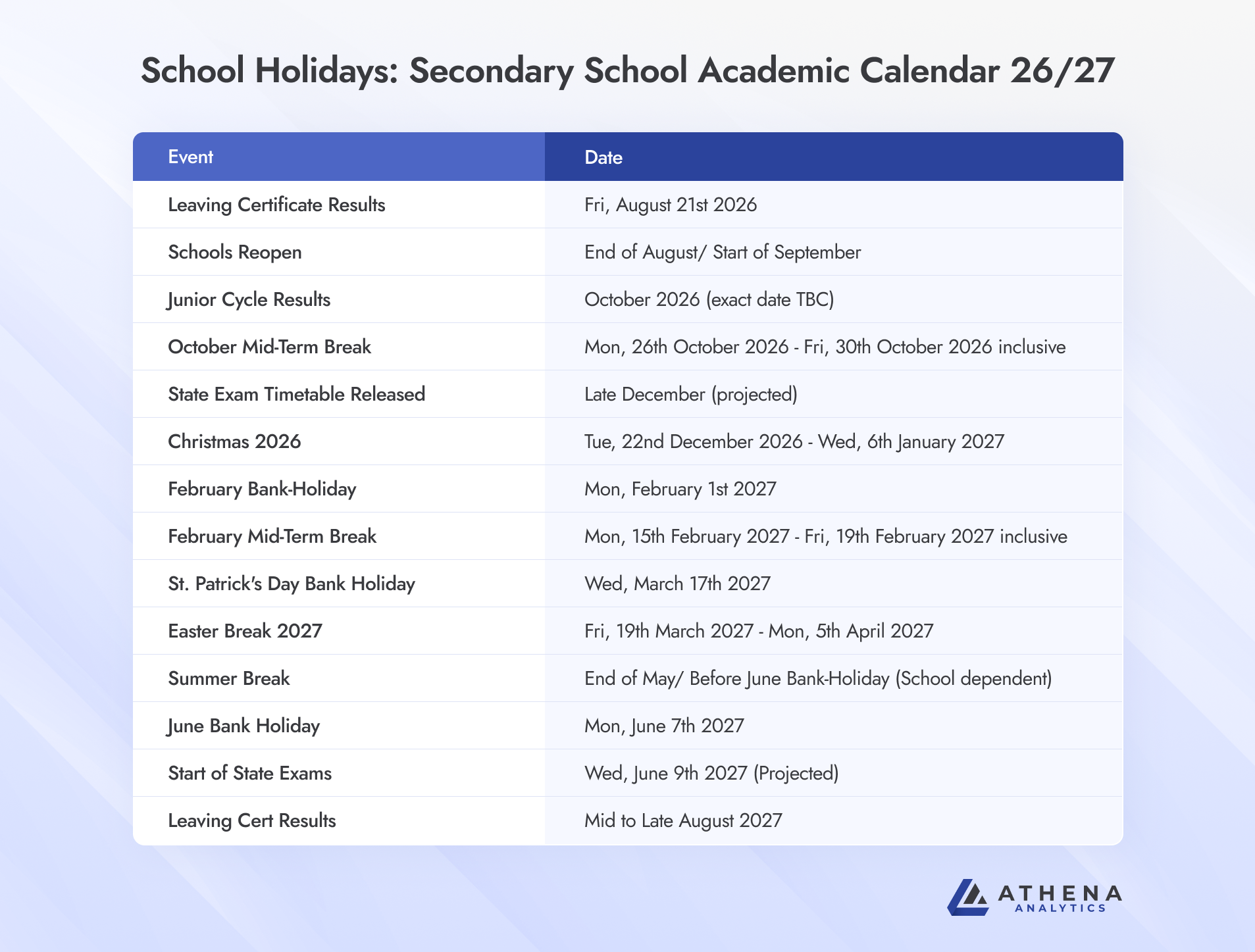

As another group of students start their Leaving Cert exams, schools around the country may already be looking at how they can optimise their internal processes and better prepare for future Leaving Cert cycles.
Over the past number of years, hundreds of secondary schools across Ireland have used the Athena Tracker to unlock student potential. However, they mightn’t have considered how they can specifically use the tracker within the Leaving Cert cycle.
In this blog post, we will look at some practical ways that schools can use the Athena Tracker to support Leaving Cert students and help them maximise their potential in one of the biggest years of their school life. Our recommendations encompass the entire Leaving Cert cycle and involve a ‘whole school approach’, where all members of the school ecosystem have a part to play.
1. Choosing The Right Subjects For the Leaving Cert Cycle
Laying the foundation for a positive Leaving Cert cycle starts with choosing the right subjects, or subjects that fit a student’s particular profile. Oftentimes students select subjects on a whim. They make decisions based on what they think they’d like but mightn’t be best suited to them and their unique capabilities.
With the Athena Tracker, students and guidance counsellors can be more strategic and pragmatic about this process, selecting subjects based on objective data. When it comes to picking subjects for the Leaving Cert cycle, guidance counsellors can sit with students individually and walk them through their choices based on their Athena Tracker profile. Together, they can tease out the subjects that a student has the highest potential in or will provide them with the best chance of maximising CAO points. Guidance counsellors can also use the Athena Tracker to pinpoint which subjects might be better suited to ordinary level.
Basing this decision on data, brings incredible clarity for all involved and removes a lot of the guesswork. For example, a student might be considering Geography but, while looking at the Athena Tracker with their guidance counsellor, they discover that their ceiling is relatively low for that subject and that they might be better suited to Home Economics or Business. In this way, schools are setting students up for success and allowing them to maximise their own unique potential.
2. Using the Athena Tracker When Changing Subjects
While the Athena Tracker can be used in the initial decision-making process, it can also be incredibly helpful if a student decides to change subjects at a later date.
It might be that a student is struggling in a certain subject and starts to think about CAO points and overall attainment. While reviewing data on the Athena Tracker, a guidance counsellor can suggest subjects that would be more suited to their unique capabilities. This is based on their profile and the subjects that students in a similar profile have excelled at.
This is a powerful stress-relieving tool for students, who often second-guess themselves. Being able to back up decisions with concrete data allows students to be much more confident in their choice.
3. A Formalised Approach to Target Setting
When it comes to Leaving Certificate students, one of the most valuable uses of the Athena Tracker is being able to formalise the entire target setting process. Working in collaboration with year heads and guidance counsellors, students can set realistic targets that are based on a student’s baseline potential score for each subject.
In the past, a student might have set targets based on what they would like to achieve in a certain subject or what they need to achieve to attain a certain number of CAO points. However, without analysing the data at hand, a student doesn’t know if they are aiming too high or too low. The Athena Tracker allows students to be objective about the targets they set.
It’s also important to note how the tracker streamlines this process for year heads and guidance counsellors. A guidance counsellor may be holding hundreds of one-on-one discussions with students and mightn’t know each student individually. However, by reviewing the tracker, they can quickly get to know a student from an academic perspective. They can see historical data, understand their potential for each subject and set realistic, objective targets. This saves valuable time for guidance counsellors who otherwise have to wade through dozens of exam results for each student, whilst simultaneously trying to provide useful and measured insight.
4. Understanding Current Level and Managing Expectations
The Leaving Certificate is an incredibly stressful period in a student’s life. This is often caused by students having unrealistic expectations and placing undue pressure on themselves. As well as formalising the target setting process, the Athena Tracker also allows students to be more objective about their current achievements. By getting to know their own unique potential, they can better understand their current level and what they’re capable of. This can be both reassuring and highly motivating for students.
For example, a student’s baseline potential grade for a subject might be a H3 and they are currently exceeding that target with their H2 exam results — something to be proud of. However, because they wanted to achieve a H1, they might see anything below that as a failure and start to get down on themselves. This can create a negative spiral that can be detrimental.
On the flip side, a student may have set a target to achieve a H3 and may currently be achieving that grade. However, their baseline potential score shows that they are capable of achieving even more and reaching a H2 grade. This can be hugely motivating for students, who develop a sense of belief in their potential.
5. Putting Interventions in Place in Real Time
The Leaving Cert cycle takes place over a relatively short period of time. For this reason it is vitally important that teachers/year heads/academic tracking post holders are able to spot when a student is struggling to cope. If a negative trend goes unnoticed, a student may fall too far behind and lose valuable time.
With the Athena Tracker, teachers/year heads/academic tracking post holders can easily spot when a student is falling below their potential. By knowing this, they can start an open conversation with the student, find out the reason behind their struggles and put interventions in place, all in real time. Interventions here could include scheduling a one-on-one meeting with a guidance counsellor, informing a subject teacher that their student may need extra attention, or even notifying a parent if need be.
Early interventions are particularly important for a school’s pastoral care team. Using the tracker, they can spot students who are falling below their potential in multiple subjects. After talking to these students, the pastoral care team may discover that they are struggling to deal with the pressure of exam year. By spotting this early, they can help them deal with the stress.

6. Reflecting on Your Progress as a School
Leaving Cert results day may be the final act for students who move on to third-level education or the next stage of their journey. However, it is not the end of the line for schools, who can use the results as a chance to reflect.
Schools often diligently track results throughout a student’s time in school but don’t add in the final Leaving Certificate result. This is a huge opportunity missed. By reviewing results in the tracker, schools can see how a student’s results compare to their own unique potential. It provides a reference point for schools who may deem a certain grade as good or bad without knowing the context. Also, if a number of students didn’t reach their potential in a certain subject, it is a perfect opportunity to start a dialogue with that department to see if there was anything they could have done differently or if there are areas they could improve on for the year ahead.
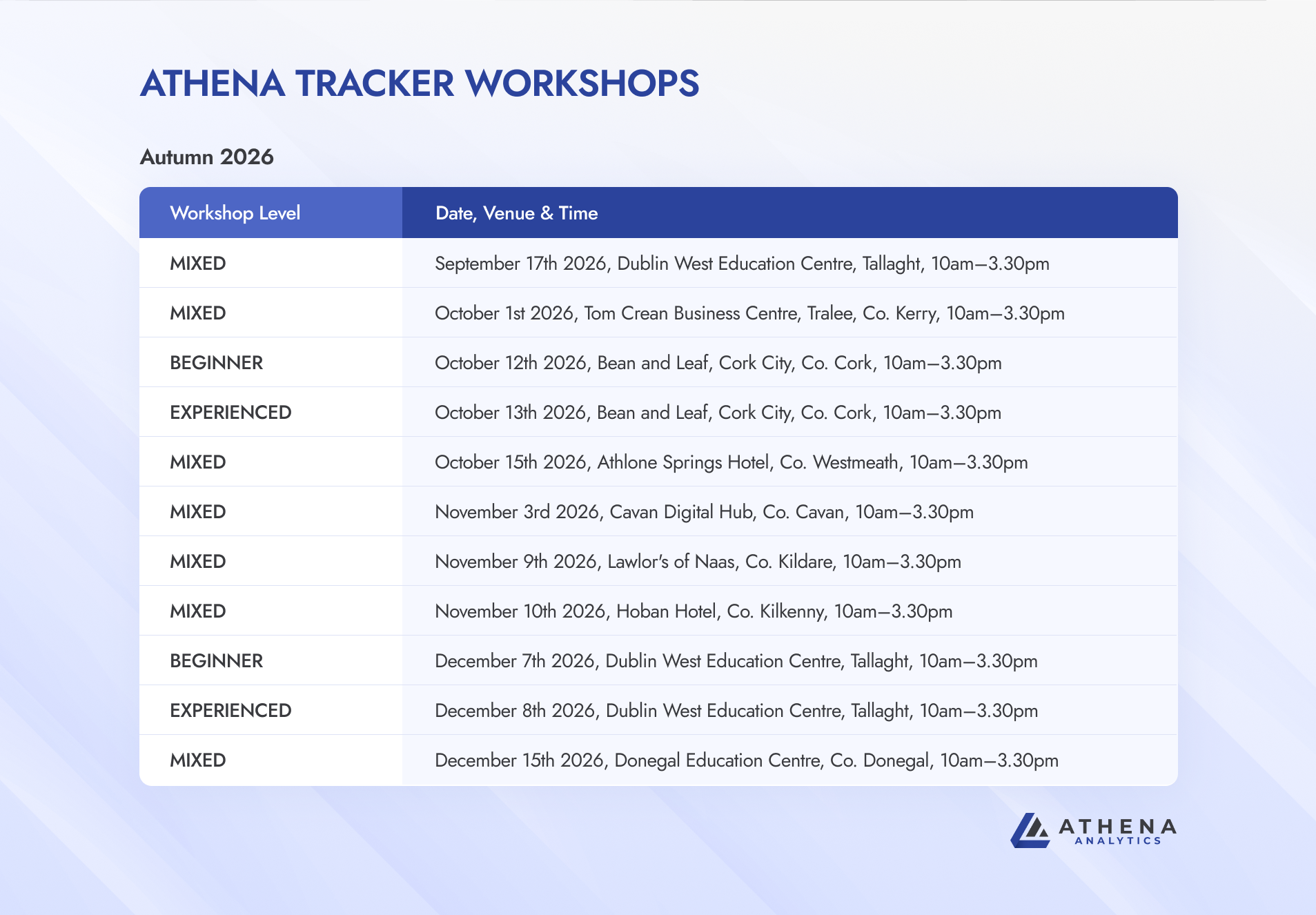
Best of luck to all schools as you prepare your students for the Leaving Cert Examination.
Want to learn more about the Athena Tracker? Book a free demo today.